
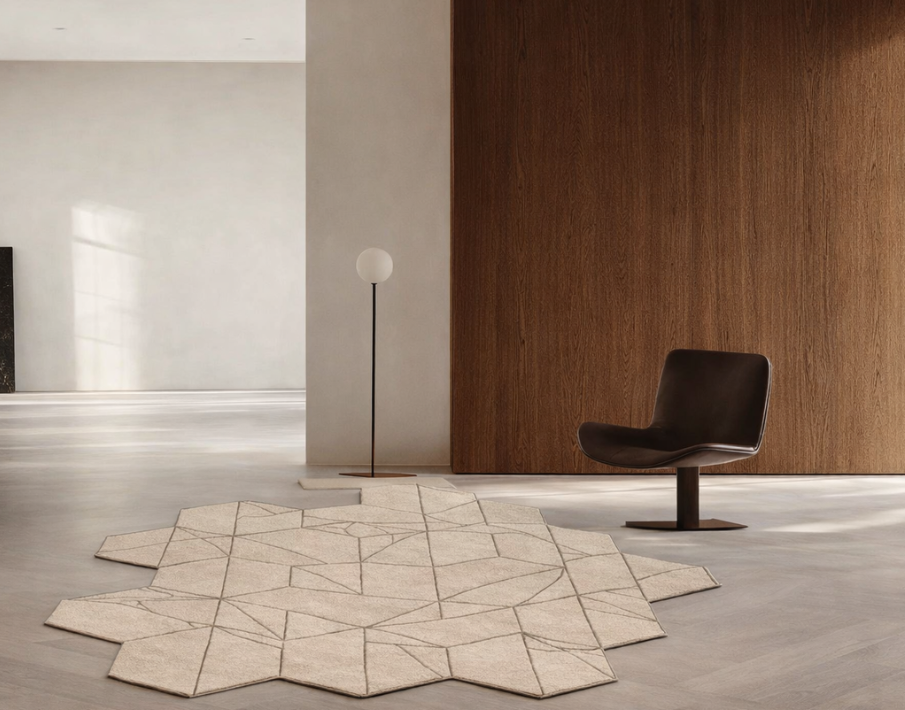
Custom Rug Manufacturing in India:Craftsmanship, Process and What SetsQuality Apart
When a Rug Becomes a Design Statement
For interior designers and creative directors, a rug is rarely just a floor covering. It anchors a space, defines a palette, carries a texture that changes with the light. When a client’s brief demands something truly specific — a colour that doesn’t exist in any catalogue, a pattern drawn from an artwork, a pile height that echoes the softness of a particular fabric — off-the-shelf simply isn’t an option. This is where custom rug manufacturing enters the picture. And this is where the difference between a factory and a true craft atelier becomes everything.
India's Craft Heritage: More Than a Origin Story
The Indian subcontinent has been producing exceptional handmade textiles for centuries. In the rug industry specifically, regions like Panipat have developed into world-class manufacturing clusters — not because of cheap labour, but because of accumulated knowledge. Generations of artisans who understand yarn behaviour, tension, pile structure and colour interaction in ways that no machine can replicate. For a designer sourcing a custom rug, this heritage matters practically. It means working with craftspeople who can look at a reference image and instinctively know how to translate it into pile — which areas need carving to create relief, where the colour needs to be slightly shifted to read correctly at floor level, how the direction of the pile will affect the final appearance under directional lighting. This kind of expertise doesn’t appear in a spec sheet. It shows up in the finished piece.
The Custom Manufacturing Process, Step by Step
Understanding how a hand-tufted rug moves from concept to completion helps designers make better briefs — and set more realistic expectations with their clients.
Stage 1 — Design Translation
The process begins with your brief: a mood board, a sketch, a vector file, or sometimes simply a reference image and a conversation. A strong manufacturing partner has an in-house design team capable of converting your vision into a technical layout that guides the artisans — indicating pile heights, colour zones, carving directions and finishing details.This stage is where the creative dialogue happens, and where the quality of
communication between designer and manufacturer makes or breaks the outcome.
Stage 2 — Yarn and Material Selection
Material choices are made at this stage, in direct relation to the design intent. Wool remains the benchmark material for premium hand-tufted rugs — its natural lustre, resilience and ability to hold complex dye formulations make it the preferred choice for high-end residential and contract projects. Viscose can be introduced selectively for areas requiring a high-sheen contrast. Cotton works well in flat-woven or structural sections. Pile height is also determined here — typically ranging from 8mm for a sleek, graphic result to 20mm or more for a deeply tactile, sculptural effect.
Stage 3 — Dyeing
This is where colour comes to life — and where the gap between manufacturers is most visible. A skilled dye master can match a Pantone reference with remarkable precision, accounting for the way wool absorbs pigment differently from synthetic fibres, and how the finished colour will read under different light conditions. At Rugs & Riches, the dyeing process uses environmentally responsible methods — AZO-free dyes, controlled water usage and sustainable practices developed over decades. The result is colour that is not only accurate but lasting.
Stage 4 — Tufting
The tufted canvas is stretched on a frame, and artisans work across its surface with a handheld tufting gun, punching yarn into the backing according to the design layout. For complex pieces, this requires sustained precision and an intimate understanding of how different yarn weights and pile densities behave under the gun. This is the stage most visible in behind-the-scenes documentation — and one of the
most compelling stories a designer can tell their client about the provenance of a custom piece.
Stage 5 — Carving, Washing and Finishing
Once the tufting is complete, carving defines the rug’s three-dimensional character — artisans use scissors and knives to sculpt the pile, creating depth between motifs, sharpening edges and adding tactile relief that photographs rarely capture fully. The rug is then washed to set the fibres, enhance the lustre of the wool and remove any residual material from the production process. Final finishing — backing, binding, stretching — ensures the piece will lie flat and hold its shape over years of use.
Collaborating with Artists: The Next Frontier in Custom Rugs
One of the most exciting developments in the high-end rug market is the growing collaboration between manufacturers and visual artists — painters, illustrators, photographers — whose work translates with extraordinary richness into pile. The logic is straightforward: an artist’s painting, rendered in wool at floor scale, becomes something entirely new. The texture of the pile adds a dimension that the original flat work doesn’t have. Colours shift with the light. The piece becomes both functional object and art work. For interior designers, this opens a genuinely differentiated offering — limited-edition or one-of-a-kind rugs that carry a provenance story, an artist’s signature, a collectible quality. For retailers building a premium assortment, artist collaborations are one of the most effective ways to move beyond catalogue and into curation. Rugs & Riches has developed specific expertise in this area, working with artists to
translate their visual language into the constraints and possibilities of the tufting process — a dialogue that requires both technical knowledge and genuine creative sensitivity.
What Separates a Craft Manufacturer from a Production Facility
The distinction matters more than it might seem. A production facility optimises for throughput — standardised designs, predictable materials, repeatable processes. This suits certain buyers perfectly well. A craft manufacturer optimises for outcome — the finished piece as it will live in a
specific space, under specific light, in conversation with specific furniture and architecture. The production process serves the design intent, not the other way around.
Concretely, this means a craft manufacturer will push back if a design choice won’t translate well into pile. Will suggest a material substitution that better serves the visual. Will flag a colour combination that risks reading differently at floor scale. This kind of input — offered from a place of expertise rather than convenience — is what a designer is really paying for when they choose a premium manufacturing partner.
Starting a Custom Project: What to Prepare
To make a first conversation with a manufacturer as productive as possible, come prepared with:
● A clear design reference — mood board, sketch, vector file or artwork
● End-use context — residential or contract, traffic level, room dimensions
● Material preferences — or openness to recommendations based on the
design
● Timeline — working backwards from your installation or delivery date
● Budget range — this determines material and complexity options from the
start
The more context you bring to the first conversation, the more precise and useful the manufacturer’s response will be.
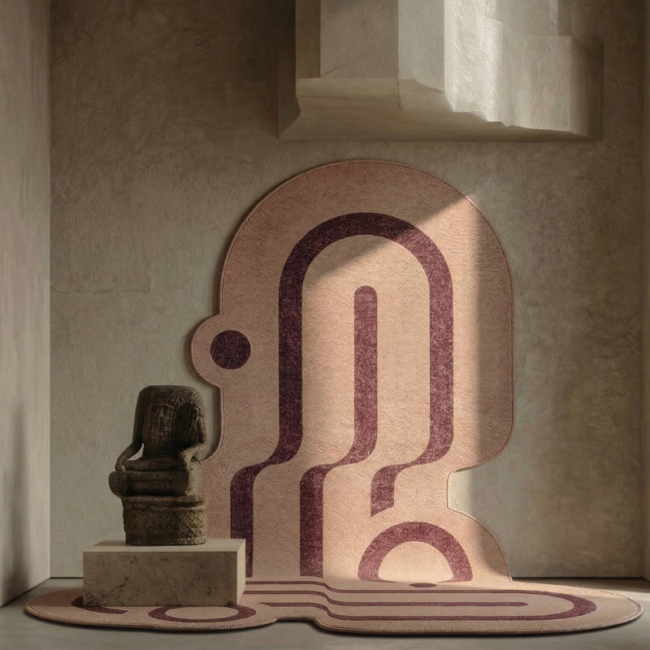
Rugs & Riches: Where Craft Meets Creative Vision
For over 35 years, Rugs & Riches has worked at the intersection of artisan craft and design ambition — producing hand-tufted rugs for a select portfolio of European and US clients who demand both creative fidelity and exceptional quality. From a single statement piece for a residential project to a custom collection for a furniture brand, every commission begins with listening and ends with a rug that reflects exactly what it was meant to be.