
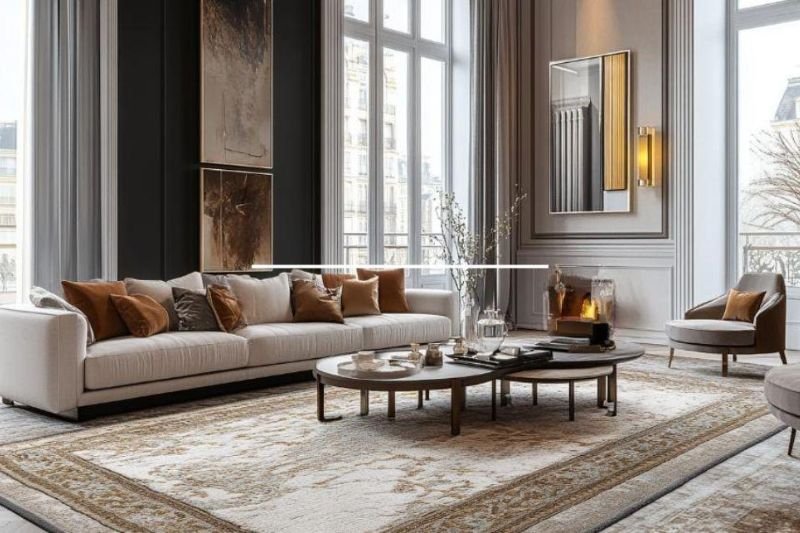
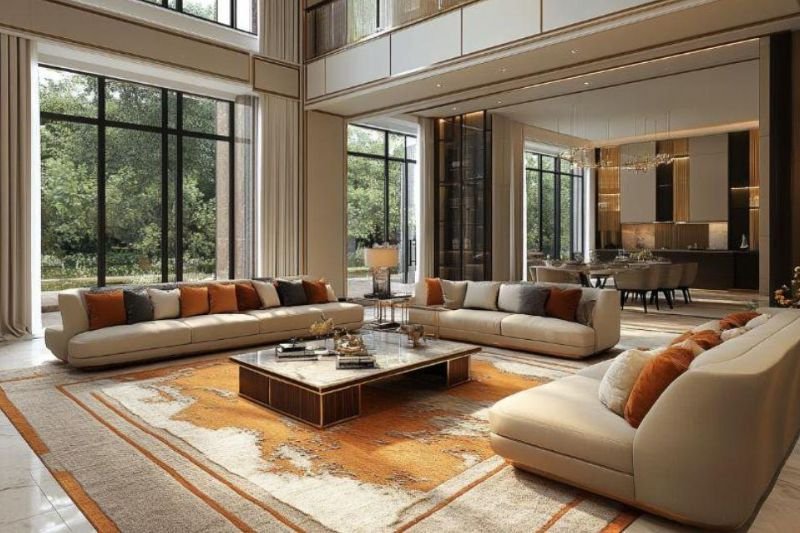
Walk into a beautifully designed room and you may notice the furniture first.
The sofa.
The dining table.
The artwork.
The lighting.
But look down, and you will often find the element quietly holding everything together.
The rug.
A rug occupies a surprisingly large visual area within an interior. It sits at the point where architecture, furniture and movement meet. It defines where one space begins and another ends. It can make a large room feel more intimate, give a small room a greater sense of openness, or bring a collection of individual pieces together into one coherent composition.
This is why experienced designers rarely think of a rug simply as something that fills an empty floor.
They think about scale.
Because the right rug does not just fit inside a room.
It changes the way the room is perceived.
In contemporary interiors, where open plans, expansive architectural volumes and carefully considered material palettes have become increasingly common, this becomes even more important. The floor is no longer a passive backdrop. It becomes one of the defining elements of the interior, helping to establish proportion, rhythm, warmth and visual balance.
The question, therefore, is not simply:
“What size rug should I buy?”
It is:
“What scale should this room feel like?”
Scale Is More Than Size
When designers talk about scale, they are not talking only about measurements.
Scale is about perception.
A room can be physically enormous yet feel intimate. Another can be relatively compact yet feel surprisingly expansive.
Furniture contributes to this perception. So do ceiling heights, windows, architectural proportions, lighting and material choices.
The rug is another powerful part of that equation.
A small rug surrounded by a large expanse of flooring can make furniture feel isolated. A larger rug can visually gather those same pieces into a single arrangement.
A rug with a strong pattern can make the floor feel visually active. A quieter design can allow the architecture to take precedence.
An organic shape can soften a rigid room. A strong geometric rug can reinforce architectural lines.
Even the texture of the rug can influence perceived scale. A richly textured surface has a visual presence that a very flat surface may not.
This is why rug selection is ultimately an exercise in relationships.
The rug, furniture and architecture are constantly influencing how we read the room.
The Rug Creates an Invisible Boundary
One of the most powerful things a rug can do is define space without physically dividing it.
This is particularly important in open-plan interiors.
Modern homes, hotels, offices and hospitality spaces often contain large continuous areas where living, dining, working and socialising happen within one architectural volume.
There may be no wall separating one function from another.
The rug can create that separation.
Place one beneath a seating arrangement, and the furniture suddenly feels like a deliberate zone rather than a collection of individual objects. Place another beneath a dining table, and the dining area gains its own visual identity.
The boundary is invisible, but the eye understands it.
This is one of the reasons designers use rugs as architectural tools.
They establish where a space begins.
They establish where it ends.
And they create a sense of belonging within larger interiors.
The result can make an expansive room feel more organised without making it feel divided.
Why Small Rugs Can Make Large Rooms Feel Even Larger
There is a common assumption that putting a small rug into a large room will make the space feel bigger.
Visually, the opposite can often happen.
When a small rug sits in the centre of a large floor, the exposed flooring around it becomes more noticeable. The furniture may appear disconnected from one another, and the rug can begin to look like an isolated object rather than part of the room.
The eye reads the rug as one small island within a much larger field.
This can make the room feel fragmented.
A larger rug can do something very different.
By extending beneath and around the furniture, it visually gathers the pieces together. The seating arrangement becomes one composition. The floor becomes less fragmented. The room begins to feel more unified.
This does not mean that every room needs the largest possible rug.
It means that the rug should be considered in relation to the scale of the furniture and the architectural volume around it.
A rug that is appropriately scaled can make a room feel calmer, more grounded and more intentional.
Large Rooms Need Visual Anchors
Large rooms present a different challenge.
When there is a generous amount of floor area, furniture can sometimes appear to float within the architecture.
This is particularly noticeable in rooms with high ceilings, large windows or expansive stone floors.
A rug introduces an anchor.
It gives the eye a surface that connects the furniture to the floor and the floor back to the architecture.
This is one reason rugs play such an important role in luxury residences, boutique hotels, galleries, private clubs and expansive hospitality environments. They can soften large spaces while creating visual rhythm and a sense of human scale.
Without changing the architecture itself, the rug can make a large room feel more considered.
It gives the room a centre.
And sometimes, that centre is what makes a large space feel comfortable rather than simply impressive.
Furniture Should Feel Like It Belongs to the Rug
A rug and the furniture above it should feel connected.
Not necessarily because they match, but because they share a sense of proportion.
When a rug is too small for the furniture arrangement, chairs and sofas can feel as though they are sitting around it rather than within it.
When the rug is appropriately scaled, the furniture begins to feel anchored.
The difference can be subtle.
But visually, it is significant.
A rug can turn separate pieces into a conversation.
The sofa becomes part of a seating area. The chairs become part of the same composition. The coffee table no longer feels like an isolated object in the centre of the room.
The rug creates the visual field in which everything else operates.
This is why designers often consider the furniture arrangement and the rug together rather than treating them as separate decisions.
The rug should not simply fit beneath the furniture.
It should hold the composition together
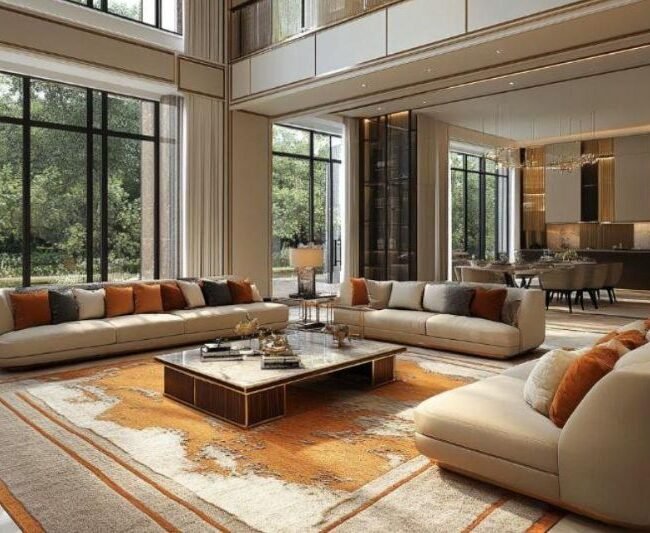
Scale Can Create Intimacy
Not every large room needs to feel monumental.
Sometimes the objective is to make a generous space feel warmer and more intimate.
This is where rugs become particularly effective.
A large, tactile rug can visually reduce the sense of distance between furniture pieces. It can create a softer zone within a much larger room, encouraging people to gather rather than simply pass through.
Texture contributes to this effect.
A richly tactile surface introduces warmth and softness into an otherwise hard environment. Stone, concrete, glass and metal can feel architectural and expansive. A rug creates a human counterpoint.
This is one reason materiality has become so important within contemporary interiors.
As walls become more restrained and colour palettes become quieter, the character of individual surfaces becomes more significant. Rugs contribute softness without compromising sophistication and comfort without sacrificing elegance.
A large room does not always need more furniture.
Sometimes it needs a stronger sense of connection between the furniture it already has.
Small Rooms Need Breathing Space
The same principle works in smaller interiors, although the approach changes.
A small room can quickly feel crowded when too many visual boundaries are introduced.
The rug therefore needs to work with the architecture rather than compete against it.
A quieter design, considered proportions and a restrained relationship between the rug and surrounding flooring can help maintain a sense of continuity.
This is where the idea of scale becomes more nuanced.
A rug does not necessarily make a room feel larger simply because it is large.
It makes a room feel larger when its relationship with the architecture creates visual continuity.
The edges, surrounding floor, furniture placement and pattern all contribute to how the eye moves through the space.
In some interiors, a subtle rug that visually extends the seating area can create openness.
In others, a more defined rug can create a strong focal point and give a compact room greater identity.
The right decision depends on what the room needs.
The Shape of the Rug Can Change the Architecture
Scale is not only about length and width.
Shape matters too.
Most rooms are built around straight lines.
Walls are straight. Windows are rectangular. Doors are rectangular. Furniture often follows the same geometry.
Introducing an organic or irregular rug can create a completely different visual rhythm.
Curves can soften architectural rigidity.
Irregular edges can create movement.
Circular or free-form silhouettes can change how furniture is arranged around them.
A rug can even challenge the geometry of the room rather than simply follow it.
This can be particularly effective in contemporary interiors where architecture is highly structured.
A softer rug shape introduces tension.
And tension, when carefully controlled, is one of the things that makes an interior interesting.
The objective is not always to make the rug disappear into the architecture.
Sometimes it is to create a deliberate conversation between the two.
Pattern Can Change Perceived Scale
Pattern is another tool designers use to influence how a room feels.
A large-scale pattern can make a rug feel visually dominant, especially when viewed from above in an open-plan space.
Smaller or more restrained patterns can create a quieter surface and allow the furniture or architecture to take precedence.
But pattern can also direct the eye.
Horizontal movement can visually reinforce width.
Vertical or directional elements can create a sense of movement through a space.
Geometric repetition can introduce order.
Organic patterns can soften a highly structured interior.
Abstract compositions can create a sense of depth without relying on literal imagery.
The important thing is to consider the scale of the pattern in relation to the room.
A very intricate pattern in a large room can sometimes disappear from a distance.
A very large graphic pattern in a compact room can become the dominant visual element.
Neither is inherently right or wrong.
The question is whether the pattern is appropriately scaled to the experience you want to create
Texture Creates Another Dimension of Scale
Two rugs can occupy exactly the same amount of floor space and still feel completely different.
The reason is texture.
A flatwoven surface has a different visual weight from a deeply sculpted pile. A carved rug interacts differently with light than a smooth surface. Subtle changes in pile height can create shadow and movement even when the colour palette remains restrained.
Texture gives the floor dimension.
This becomes particularly powerful in neutral interiors.
When the palette is composed of warm whites, taupes, browns or natural tones, the absence of strong colour means the eye begins to notice material differences more carefully.
A textured rug can make the floor feel richer without making the room feel busier.
It can add depth without adding visual noise.
This is one of the reasons contemporary designers increasingly approach interiors through materials rather than decoration alone. Rugs become part of a larger material composition that includes stone, timber, plaster, metal and textiles
The Floor Can Make the Ceiling Feel Higher
The relationship between the floor and the rest of the room can also influence vertical perception.
When a rug establishes a strong horizontal plane, it can give the room a sense of structure.
In a tall room, this horizontal grounding can prevent the architecture from feeling overly vertical or disconnected.
In a lower room, a quieter and more continuous floor treatment can allow the eye to move more freely through the space without introducing another heavy visual boundary.
This is not about creating optical illusions in a literal sense.
It is about controlling where the eye pauses and where it moves.
Interior design is, in many ways, the art of directing attention.
The rug is one of the surfaces designers use to do that.
Why Proportion Often Matters More Than Colour
A beautifully coloured rug can still feel wrong if its proportions are not right.
Likewise, a relatively simple rug can transform a room when its scale is carefully considered.
This is because proportion creates structure.
The relationship between the rug and the furniture.
The rug and the room.
The rug and the surrounding floor.
The rug and the architecture.
All of these relationships contribute to how balanced the interior feels.
This is also why bespoke rugs offer an important advantage in high-end projects.
Instead of adapting the room to an existing standard size, the rug can be created around the proportions of the architecture and furniture arrangement.
It can respond to unusual room dimensions.
It can follow an architectural curve.
It can define a particular zone.
It can extend precisely where the designer wants the visual boundary to end.
The rug becomes an architectural component rather than an afterthought
Designing for the Way a Room Is Actually Used
A beautiful rug still needs to work with the life of the space.
A private library may require warmth and acoustic softness.
A living room may need to encourage conversation and create a sense of intimacy.
A hotel lobby may need visual impact while responding to constant movement.
An open-plan residence may require multiple rugs to establish distinct zones within a continuous architectural volume.
This is why there cannot be one universal formula for choosing the right rug.
The purpose of the space matters.
So does the way people move through it.
At Rugs & Riches, the design process begins by understanding these relationships. The team considers how a space will be experienced throughout the day, studying natural light, circulation, proportions, material finishes and the emotional atmosphere before moving into the selection of fibres, textures, colours and construction techniques.
The result is a rug that responds not only to the dimensions of a room, but to its life.
When the Rug Becomes Part of the Architecture
The most successful rugs do not look as though they have simply been placed inside an interior.
They feel as though they belong to its architecture.
Their proportions feel inevitable.
Their material responds to the surrounding surfaces.
Their texture supports the atmosphere.
Their shape follows or challenges the geometry with intention.
Their presence gives the room a sense of completion.
This is perhaps why rugs have such a unique role within luxury interiors.
They sit between furniture and architecture.
They are functional, but they are also visual.
They can be soft and tactile while remaining highly architectural.
They can quietly anchor a room or become its defining feature.
The floor becomes more than a surface.
It becomes part of the composition.
Designing From the Ground Up
For many years, rugs were treated as finishing pieces.
The room was designed first.
The furniture was selected.
The artwork was installed.
And then a rug was chosen to fill whatever space remained.
Contemporary design is increasingly moving in the opposite direction.
The floor is being considered much earlier.
Because once the rug is understood as part of the architecture, it can influence everything above it.
Furniture placement becomes more deliberate.
Colour relationships become more considered.
Circulation becomes clearer.
The visual weight of the room becomes easier to balance.
The rug provides a foundation.
And a strong foundation allows the rest of the interior to breathe.
The Rugs & Riches Approach: Proportion With Purpose
At Rugs & Riches, bespoke rug design begins with understanding the space rather than imposing a predetermined solution upon it.
Every project has its own architectural language.
A contemporary penthouse, a heritage residence, a luxury hotel lobby and a private library each require a different relationship between rug, furniture and architecture.
The process therefore begins with conversation.
The proportions of the room are studied. Natural light is considered. Circulation is understood. Materials are examined. The intended emotional atmosphere is discussed.
Only then does the rug begin to take shape.
Its size, shape, colour, texture and construction are considered in relation to the larger interior.
This philosophy reflects a simple belief:
A rug should not merely occupy the floor. It should understand the space around it.
The Right Rug Can Change the Way a Room Feels
Ultimately, scale is not really about measurements.
It is about experience.
A rug can make a large room feel more intimate.
It can make an open-plan space feel organised.
It can bring separate pieces of furniture into one composition.
It can soften a monumental architectural volume.
It can give a small room a sense of continuity.
It can create a focal point without overwhelming the interior.
It can make the floor feel connected to everything above it.
This is why the most successful rugs are rarely chosen in isolation.
They are chosen as part of a larger composition.
The architecture.
The furniture.
The light.
The materials.
The movement.
The people who will inhabit the space.
When all of these elements are considered together, the rug becomes something more than decoration.
It becomes a tool for shaping perception.
And sometimes, the most powerful way to change the scale of a room is not to change the room at all.
It is simply to change what is beneath your feet.
About Rugs & Riches
For more than three decades, Rugs & Riches has collaborated with architects, interior designers, hospitality brands and discerning homeowners to create bespoke handcrafted rugs that respond to the unique character of each space.
Every rug is developed through a collaborative design process that considers architecture, lifestyle, proportions, materiality and atmosphere. By combining premium fibres with generations of artisanal expertise, Rugs & Riches creates rugs designed not simply to complete interiors, but to define their character and support the experience of the space.
At Rugs & Riches, we believe the finest rug is not necessarily the one that fills the most floor.
It is the one that creates the right sense of scale, balance and belonging.
Frequently Asked Questions
How does a rug affect the scale of a room?
A rug influences how furniture, floor space and architectural elements are visually grouped. A well-proportioned rug can make furniture feel connected, define zones and create a stronger sense of balance within the room.
Can a rug make a room feel bigger?
Yes. The perceived size of a room can be influenced by the rug’s proportions, placement, pattern, colour and relationship with the surrounding floor. A rug that creates visual continuity can help a space feel more unified and open.
Can a large rug make a room feel smaller?
A large rug can make a room feel more intimate by visually gathering furniture into a defined zone. This can be particularly effective in expansive rooms where furniture might otherwise feel disconnected.
Should all the furniture sit on the rug?
Not necessarily. The appropriate relationship depends on the furniture arrangement, room proportions and design intention. What matters most is that the rug visually connects the furniture and establishes a coherent zone.
Does rug shape affect how a room feels?
Yes. Rectangular rugs can reinforce architectural geometry, while curved or organic shapes can soften rigid spaces and introduce movement. Bespoke rugs can also be created to respond to unusual architectural forms.